POWER IS WHAT YOU CAN DO. STRENGTH IS WHAT YOU CAN WITHSTAND
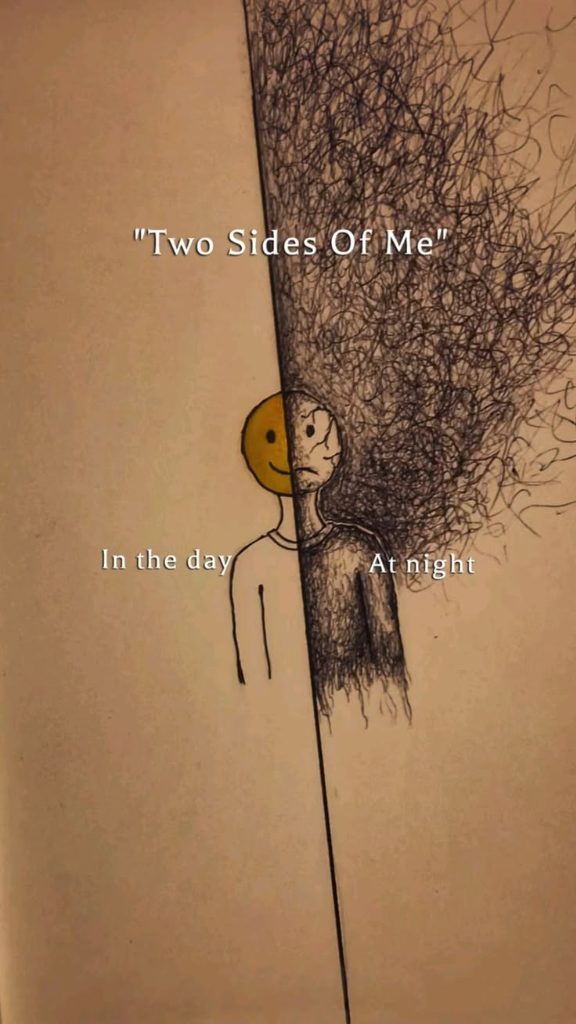
Think about it.
You can have the power to control an entire organisation but lack the strength to control your temper.
You can have enough money to buy almost anything but lack the discipline to resist buying things you don't need.
You can command the attention of thousands of people but be completely controlled by the opinion of one stranger.
You can have the power to destroy someone's reputation but lack the strength to forgive a simple offence.
How can you be so powerful over others and so powerless over yourself?
That's the paradox.
We've built a society that celebrates power and barely pays attention to strength.
We admire the person who can dominate a room, but rarely ask whether they can dominate their own impulses.
We celebrate people who have accumulated wealth, influence and authority, without questioning whether they possess the emotional capacity to handle any of it.
And sometimes, the very things we call success simply provide people with more sophisticated opportunities to demonstrate their weaknesses.
Power can make you influential.
But it cannot automatically make you emotionally mature.
Braess's Paradox: Adding Roads Increases Traffic
Removing options and eliminating shortcuts speeds up the entire network.
THE REAL TEST OF STRENGTH BEGINS WHEN YOU HAVE THE POWER TO DO SOMETHING STUPID
It's easy to appear humble when you have nothing to boast about.
It's easy to appear faithful when nobody is tempting you.
It's easy to preach financial discipline when you have no money to spend.
It's easy to claim you are peaceful when nobody has seriously offended you.
But what happens when you have the opportunity, the resources and the freedom to do exactly what you know you shouldn't?
That's where strength enters the conversation.
The ability to retaliate but choosing restraint.
The ability to exploit someone but choosing fairness.
The ability to walk away from responsibility but choosing to remain accountable.
Not because you're powerless.
But because your principles are stronger than your impulses.
And before we turn this into another motivational cliché, restraint isn't always strength. Sometimes people avoid confrontation because they're afraid. Sometimes they tolerate abuse because they've been conditioned to endure it.
Strength is not simply resisting. It is knowing what deserves resistance and what deserves action.
You can be stubborn and call yourself strong.
You can be afraid of change and call yourself principled.
You can tolerate a destructive situation for years and proudly call it endurance.
No.
Sometimes strength is staying.
Sometimes strength is leaving.
The wisdom is knowing the difference.
The Great Emu War of 1932: Military Defeat by Birds
A modern industrialized army with automatic heavy weaponry was defeated by flightless birds with no commanding general.
THE CONTRADICTION I'VE BEEN: KNOWLEDGE VS SELF-MANAGEMENT IN TRADING
Let me make this painfully personal. I've been the contradiction I'm talking about.
There is something particularly embarrassing about knowing the right thing to do and watching yourself do the exact opposite.
I've experienced that contradiction in trading.
I understand risk management. I understand why you shouldn't chase losses. I know the importance of having rules, controlling exposure and accepting that not every opportunity deserves your money.
I could explain these principles to someone else so convincingly that they might mistake me for a remarkably disciplined person.
But understanding something and living by it are two different things.
I have faced moments when a trade went against me and suddenly, all that beautiful knowledge became difficult to apply.
The voice of reason said, *You've lost. Accept it. Stop.*
But another voice insisted, *You can recover this. Just one more opportunity.*
And that's where the real battle began.
Not between me and the market.
Between what I knew and what I wanted.
The strange thing is that sometimes recovering a loss can make the problem worse.
Because instead of learning that I shouldn't have abandoned my rules, I could easily walk away thinking that breaking those rules was justified after all.
The financial recovery becomes a psychological trap.
Now imagine the embarrassment of that reality.
I have the knowledge to explain why the behaviour is dangerous.
I have the power to open or close a trade.
I have the freedom to walk away.
Yet in that moment, I struggle to exercise the strength required to do what I already know is right.
What is the point of understanding risk management if I cannot manage myself?
And this is where I've started questioning the way we celebrate intelligence.
Because sometimes the problem isn't ignorance.
Sometimes we already know.
We know the consequences.
We know the right decision.
We can even predict how badly things might end.
And we still do it.
That is the kind of weakness no academic qualification can automatically cure.
I don't share this because I have conquered it.
I share it because I've begun to realise that being able to identify your weakness is not the same as having overcome it.
And writing beautifully about self-control doesn't mean you've mastered it either.
Alien Hand Syndrome: The Autonomous Rebel Limb
Part of your physical anatomy operates as an independent conscious agent actively sabotaging your commands.
KNOWLEDGE WITHOUT WISDOM: ANOTHER RIDICULOUS HUMAN CONTRADICTION
We live in an age where knowledge has become ridiculously accessible.
You can learn almost anything from your phone.
Read books. Attend courses. Watch tutorials. Ask AI to explain complex concepts.
Yet access to knowledge has not automatically made us wiser.
In fact, some people have become exceptionally knowledgeable about problems they continue to create for themselves.
You know excessive spending destroys your finances, but you still buy things to impress people who don't care about you.
You know constant procrastination is damaging your opportunities, but you keep postponing the work.
You understand manipulation, yet repeatedly surrender your judgement to people telling you exactly what you want to hear.
What exactly is the value of knowledge that completely abandons you when you need it most?
I'm not dismissing education.
Far from it.
But we need to stop confusing information with transformation.
Knowledge helps you understand what is happening.
Application puts that knowledge to work.
Wisdom goes further. It involves judgement: knowing what to do, when to do it, why it matters and what consequences you're prepared to accept.
Because even knowledge applied brilliantly can be destructive.
A fraudster can be intelligent.
A manipulator can understand human psychology exceptionally well.
A corrupt leader can be extraordinarily strategic.
They are applying knowledge.
But would you call them wise?
Intelligence can make you effective at doing the wrong thing. Wisdom should make you question whether that thing deserves to be done at all.
Blindsight: Seeing Without Conscious Sight
The brain can possess complete, accurate sensory intelligence while the conscious ego remains 100% in the dark.
MAYBE OUR GREATEST WEAKNESS IS THAT WE KNOW TOO MUCH AND PRACTISE TOO LITTLE
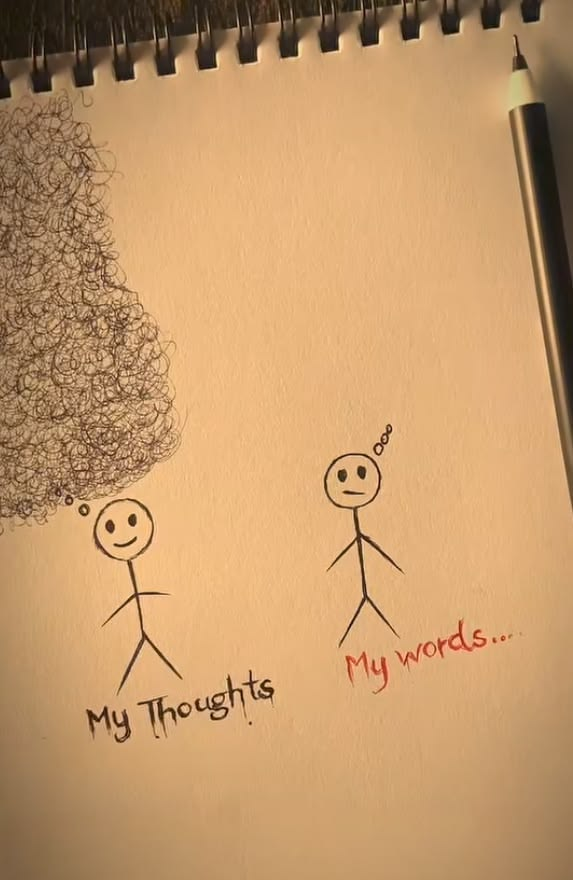
This is where I have to question myself again.
How many things do I already know that I still fail to practise?
How many books have I read whose lessons disappear the moment life becomes uncomfortable?
How often do I confuse understanding a problem with actually solving it?
It's incredibly easy to sound intelligent.
It's much harder to live intelligently.
You can write an excellent article about discipline and still struggle with your habits.
You can give a powerful speech about integrity and compromise your values in private.
You can advise someone on making the right decision while repeatedly avoiding difficult decisions in your own life.
And perhaps that's what makes this whole thing uncomfortable.
The distance between what we know and what we consistently do may reveal more about us than our qualifications ever will.
But I don't think the solution is to stop acquiring knowledge.
The solution is to stop treating knowledge acquisition as though it were the final achievement.
Learning should change something.
Your judgement.
Your behaviour.
Your decisions.
Your relationship with other people.
Otherwise, you're simply becoming a better-informed version of the same person.
The Quantum Zeno Effect: Freezing Reality Through Observation
Merely looking at something repeatedly literally prevents reality from changing.
POWER WITHOUT STRENGTH IS DANGEROUS. KNOWLEDGE WITHOUT WISDOM IS EXPENSIVE
Imagine giving enormous power to someone who cannot handle criticism.
Or giving unlimited resources to someone who cannot manage desire.
Or giving sophisticated technology to someone who has never seriously considered the ethical consequences of using it.
That's how competence becomes dangerous.
The world doesn't suffer only because people lack knowledge or power.
Sometimes it suffers because knowledgeable people have poor judgement, and powerful people lack self-control.
And the same thing happens privately.
We sabotage relationships we know are valuable.
We destroy opportunities we worked years to obtain.
We make decisions against our own better judgement, then create intelligent explanations for why we made them.
Perhaps one of humanity's strangest abilities is our capacity to rationalise the very behaviour we know is ruining us.
The Great Molasses Flood: The 35-MPH Sweet Tsunami
A thick baking sweetener transformed into a supersonic, lethal tsunami that flattened city blocks.
SO WHAT DOES IT ACTUALLY MEAN TO BE STRONG?
I don't think strength is the absence of fear, anger, temptation or weakness.
That's an unrealistic fantasy.
I think strength has something to do with being able to experience those things without automatically surrendering your decisions to them.
And wisdom means recognising that not every battle deserves a fight, not every opportunity deserves pursuit and not everything you have the power to do deserves to be done.
Maybe that's why power and strength should never be confused.
**Power asks:** *Can I do it?*
**Strength asks:** *Can I withstand the pressure?*
**Knowledge asks:** *Do I understand it?*
**Wisdom asks:** *Should I do it, and what will it cost?*
Four different questions.
And answering one doesn't mean you've answered the others.
The Mpemba Effect: Boiling Water Freezes Faster Than Cold
A system starting with extreme thermal chaos reaches stillness faster than one starting near calm.
THE FINAL MEASURE: WHAT YOU REFUSE TO BECOME
I've come to realise that some of the most dangerous weaknesses in life are hidden behind impressive abilities.
A powerful position can hide emotional insecurity.
An impressive vocabulary can hide terrible judgement.
Academic qualifications can hide a complete inability to translate knowledge into meaningful action.
And financial success can hide a person who is utterly incapable of managing themselves.
None of these achievements is worthless.
But none should automatically be mistaken for character.
Perhaps the real measure of a person isn't simply what they can achieve, but what they refuse to become while achieving it.
I don't want to be someone who knows everything about discipline but cannot practise it.
I don't want to understand wisdom intellectually while continuing to make decisions I know are destructive.
And I certainly don't want to become so powerful that nobody can correct me, yet remain so weak that I cannot correct myself.
Because what is the point of conquering the world if you're still a prisoner of your own impulses?
What is the point of accumulating knowledge if it never improves your judgement?
What is the point of having the power to change your circumstances if you lack the strength to change your behaviour?
Maybe we should stop asking people how powerful they are and start asking what they can resist.
Stop asking how much they know and start examining how they live.
And perhaps the most uncomfortable question of all is this:
I don't know about you.
But that question makes me uncomfortable.
Because I've seen enough contradictions in myself to know that I'm not exempt from it.
And perhaps that's where real growth begins.
Not when you become powerful enough to control everything around you.
But when you become honest enough to confront what you still cannot control within yourself.
You can have the power to change the world and still lack the strength to change yourself.
And that, to me, is one of the greatest tragedies of human existence.
---
*The Crazy Journal — because knowing the truth and living the truth are two entirely different battles.*
The Boltzmann Brain Paradox: You Are a Cosmic Hallucination
Mathematically, you are vastly more likely to be a floating disembodied brain hallucinating right now than a biological human on Earth.