LET ME MAKE MY POSITION CLEAR
I believe in Jesus Christ.
I believe in God. I believe in prayer. I believe faith has a legitimate place in human existence, and I have no interest in mocking people for believing in something greater than themselves.
But there is something about modern religious culture, particularly within some Christian communities, that I find deeply disturbing.
We have created environments where asking questions can be interpreted as rebellion, independent thinking can be mistaken for pride, and challenging established practices can be treated as evidence of spiritual weakness.
A person is encouraged to pray about everything but is not always encouraged to think critically about anything.
We teach people to believe, but sometimes fail to teach them how to examine what they believe.
We celebrate obedience without always distinguishing between obedience to God and obedience to human authority.
And then we wonder why so many intelligent people struggle to produce original ideas.
Here is the uncomfortable possibility:
I am not attacking Christianity.
I am questioning what happens when religious conformity begins to replace curiosity, intellectual courage, and personal responsibility.
If that makes someone uncomfortable, perhaps the discomfort is worth examining.
WHEN ASKING QUESTIONS BECOMES A SPIRITUAL OFFENCE
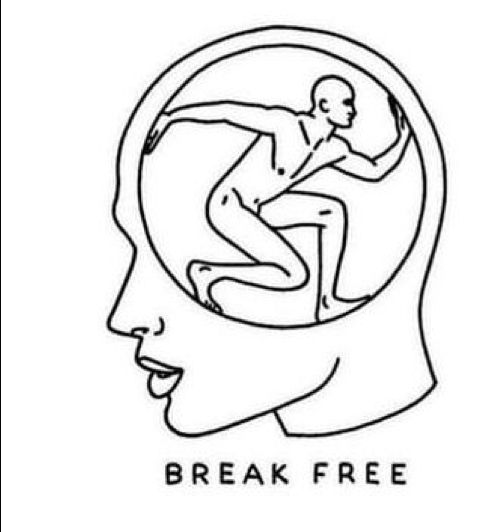
Think about how children naturally behave.
They ask questions.
Why does the sky look blue?
Why must things be done this way?
What happens if we try something different?
Why is this rule necessary?
Children are naturally curious. They experiment, imagine possibilities, challenge assumptions, and frequently refuse to accept explanations that make no sense to them.
Curiosity is one of the foundations of creativity.
Now imagine raising a child in an environment where certain questions are consistently discouraged.
"Don't question that."
"That's how we've always done it."
"Who are you to challenge the pastor?"
"Just believe."
"You are thinking too much."
Over time, the child learns something beyond the religious lesson being taught.
They learn that questioning authority is dangerous.
They learn that agreement is rewarded.
They learn that expressing uncertainty can attract criticism.
They learn to keep difficult questions to themselves.
Eventually, they may stop asking altogether.
Not necessarily because they have found answers.
But because they have discovered that silence is safer.
And silence, when repeatedly rewarded, can become a habit of the mind.
The tragedy is not merely that the person stops questioning religious teachings.
It is that the habit can spread into other areas of life.
Business.
Education.
Technology.
Politics.
Relationships.
Leadership.
If a person has been conditioned to accept authority without examination, why should we assume that habit will magically disappear when they enter a boardroom or start a company?
The Dancing Plague of 1518
Hundreds of people literally danced themselves to death due to collective social dread.
RELIGIOSITY CAN BECOME A FORM OF MENTAL IMPRISONMENT
There is a difference between faith and dogmatism.
Faith can coexist with humility, curiosity, uncertainty, and a willingness to learn.
Dogmatism insists that important questions have already been settled and that challenging established answers is unacceptable.
The problem is not simply believing something strongly.
The problem begins when believing becomes a substitute for examining.
When familiarity is mistaken for truth.
When religious leaders become intellectually untouchable.
When people inherit interpretations without understanding how those interpretations were formed.
When defending a position becomes more important than discovering whether it is correct.
At that point, the mind is no longer exploring.
It is guarding.
And guarding existing ideas is fundamentally different from producing new ones.
Creativity requires the ability to consider alternatives.
What if our assumptions are wrong?
What if there is another explanation?
What if this problem can be solved differently?
What if the method that worked twenty years ago is no longer appropriate?
But a deeply dogmatic mindset often sees alternatives as threats.
It becomes more concerned with preserving accepted answers than examining new possibilities.
That is a dangerous condition for any human mind.
Because the world does not stop changing simply because a community has become comfortable with its explanations.
The difference depends on whether people are permitted to examine what they have inherited.
Alien Hand Syndrome: The Autonomous Rebel Limb
Part of your physical anatomy operates as an independent conscious agent actively sabotaging your commands.
EVEN RESEARCH HAS RAISED THIS UNCOMFORTABLE QUESTION
This argument is not entirely philosophical.
Researchers have investigated possible relationships between religiosity, cognitive flexibility, and creativity.
In 2021, Verena Krause, Jack Goncalo, and Carmit Tadmor published a paper titled *Divine Inhibition: Does Thinking About God Make Monotheistic Believers Less Creative?*
Across six studies, they found evidence that thinking about God could inhibit creative performance among monotheistic believers. Their proposed explanation involved a passive-followership mindset.
That finding is uncomfortable, especially for those of us who believe in God.
But discomfort is not a legitimate reason to dismiss research.
Another study, published in *Personality and Individual Differences* in 2016, reported a negative relationship between religious fundamentalism and creativity among Egyptian undergraduates. However, fundamentalism explained only 3.9% of the variation in creativity.
That number matters.
It means religiosity is far from a complete explanation of creative ability.
Other research complicates the picture further. A 2018 study by Acar, Runco, and Ogurlu found that greater religiosity in American communities was associated with less favourable attitudes towards creativity, but it did not establish a significant relationship with actual creative achievement.
So the evidence does not justify saying religious people are universally uncreative.
It does justify asking whether certain religious environments encourage habits that restrict creative thinking.
And that distinction is essential.
A believer can be highly creative.
An atheist can be rigid and dogmatic.
Both religious and non-religious people can become prisoners of unquestioned assumptions.
The real enemy of creativity is not necessarily belief.
It is mental rigidity.
And religious certainty can become a particularly powerful form of rigidity when it is treated as sacred and therefore beyond examination.
PRAYER HAS BECOME AN EXCUSE FOR AVOIDING RESPONSIBILITY
Here is where the discussion becomes particularly uncomfortable.
In some religious environments, we have developed an alarming tendency to spiritualise problems that require practical solutions.
A business is failing.
Instead of examining its pricing, customer experience, financial management, market positioning, and operational weaknesses, the owner begins searching for a spiritual explanation.
A student repeatedly performs poorly.
Instead of investigating study habits, learning difficulties, preparation, or ineffective teaching methods, the conversation turns immediately towards spiritual attacks.
An organisation suffers from terrible leadership.
Rather than demanding accountability, improving systems, or replacing incompetent managers, people are told to pray harder.
Let me be careful here.
I am not saying prayer is useless.
I believe in prayer.
But **prayer should not become a respectable excuse for refusing to take responsibility.**
You cannot pray away an incompetent management structure while deliberately refusing to fix it.
You cannot replace financial literacy with declarations of prosperity.
You cannot substitute market research with optimism.
You cannot build a successful technology company on enthusiasm alone while refusing to understand technology.
You can pray for wisdom and still need to study.
You can pray for opportunities and still need to develop competence.
You can pray for a successful business and still need a viable business model.
These things are not necessarily contradictory.
The disturbing part is how easily practical ignorance can become disguised as spiritual confidence.
And once ignorance receives religious approval, correcting it becomes extraordinarily difficult.
Because the person no longer sees an information problem.
They see a spiritual battle.
That sentence may sound offensive.
But refusing to acknowledge an ineffective strategy because one has attached spiritual meaning to it does not make the strategy effective.
Reality remains reality.
JESUS WAS NOT AFRAID TO CHALLENGE ESTABLISHED THINKING
One of the strangest contradictions I observe is that some Christians celebrate Jesus while discouraging behaviours that feature prominently in the Gospel accounts of his life.
Jesus was not portrayed as someone who merely repeated every accepted interpretation without examination.
He challenged religious authorities.
He questioned prevailing assumptions.
He confronted hypocrisy.
He disputed established interpretations of religious practices.
Consider his teaching about the Sabbath in Mark 2:27.
Jesus challenged an understanding of Sabbath observance that had lost sight of human wellbeing.
That was not a rejection of God.
It was a challenge to how a religious principle was being interpreted and applied.
Consider John 9:1–3.
When Jesus encountered a man born blind, his disciples asked whose sin had caused the condition.
Jesus rejected the assumption that the blindness necessarily resulted from the man's sin or his parents' sin.
Think about that.
The disciples approached a human problem with an inherited explanatory framework.
Jesus challenged the framework.
He did not merely accept the assumption because it sounded religious.
Now consider the Bereans in Acts 17:11.
They examined the Scriptures to evaluate the teaching they received from Paul.
Their willingness to investigate was presented positively.
And in 1 Thessalonians 5:21, believers are instructed to test what they encounter and retain what is good.
These passages do not mean every Christian doctrine should be endlessly reinvented or that every individual opinion is equally valid.
But they make something difficult to deny:
Jesus calls people to transformation, not merely outward conformity.
And genuine transformation requires more than repeating what everyone around you already believes.
THE CREATOR GAVE PEOPLE CREATIVE ABILITIES
There is a biblical account I find especially fascinating.
Exodus 31:1–5 describes Bezalel, a craftsman empowered with wisdom, understanding, knowledge, and artistic ability.
His work involved design, craftsmanship, and the skill necessary to produce physical objects.
Notice what is being celebrated.
Not merely religious speech.
Not merely the ability to recite sacred words.
But technical competence.
Design.
Knowledge.
Skill.
Craftsmanship.
The ability to imagine and produce something valuable.
Within the biblical account, these abilities are presented as compatible with divine empowerment.
That should challenge the idea that spirituality and intellectual or artistic productivity belong to separate worlds.
If creativity is valuable enough to feature in the construction of a sacred space, why should religious communities become places where creative thinking is feared?
Why should an engineer feel less spiritually valuable than a preacher?
Why should a scientist's curiosity be treated with suspicion?
Why should an artist's imagination be restrained merely because it produces something unfamiliar?
Of course, creative ideas still need ethical judgement. Originality does not automatically make something good.
But neither does familiarity.
Discernment requires examination.
Not reflexive rejection.
WE HAVE CONFUSED LOYALTY TO GOD WITH LOYALTY TO MEN
This may be one of the most dangerous consequences of unhealthy religiosity.
A religious leader expresses an opinion.
Followers receive it as something approaching unquestionable truth.
A pastor recommends a particular course of action.
A member becomes reluctant to evaluate whether the advice is appropriate.
An institution maintains an ineffective practice.
Everyone continues participating because challenging leadership might be interpreted as disloyalty.
At some point, a legitimate spiritual relationship becomes entangled with human power.
And power does not always welcome questions.
Questions expose weaknesses.
Questions reveal inconsistencies.
Questions demand explanations.
Questions make manipulation more difficult.
An environment that discourages questioning may preserve organisational control, but it risks sacrificing intellectual growth.
This should concern anyone who genuinely values truth.
Because truth and authority are not identical.
A person can occupy a respected religious office and still misunderstand economics, medicine, technology, psychology, or public policy.
A gifted preacher is not automatically a competent financial adviser.
A spiritual leader is not automatically qualified to make medical decisions.
An influential religious personality is not exempt from ordinary standards of evidence.
Respecting someone does not require surrendering judgement to them.
And believing in Jesus does not require believing that every person speaking in his name is correct.
No human authority should become so protected that accountability disappears.
RELIGIOUS CONFORMITY CAN PRODUCE A CULTURE OF MEDIOCRITY
Creativity is not simply the ability to paint, write music, or invent technology.
It includes the ability to identify problems, generate alternatives, challenge assumptions, and develop useful solutions.
This applies to societies as much as individuals.
A school needs creative teachers.
A hospital needs professionals capable of improving systems.
A business needs people who can recognise changing customer needs.
A country needs citizens who can examine policy, question ineffective institutions, and imagine better ways of organising collective life.
But imagine a society where people are repeatedly taught that established authority should rarely be questioned.
Where inherited practices receive more respect than evidence.
Where uncertainty is viewed as weakness.
Where bold thinking is confused with arrogance.
Where conformity is rewarded more consistently than originality.
Such a society may produce highly obedient individuals.
It may preserve strong communal traditions.
It may even create considerable social stability.
But it also risks discouraging the very thinking required to solve unfamiliar problems.
This is not a claim that religious societies cannot innovate. History provides plenty of religious thinkers, artists, scientists, and innovators.
It is a warning about a particular cultural mechanism.
The individual begins calculating not whether an idea is useful or true, but whether expressing it will cost them acceptance.
That calculation can kill an idea before it is ever tested.
And sometimes the most damaging censorship is not imposed by an institution.
It is the censorship people learn to impose upon themselves.
They stop imagining certain possibilities because they already know how their community might react.
STOP CALLING FEAR HUMILITY
There is something I find deeply dishonest about the way fear can be presented as virtue.
A person is afraid to question a religious leader.
They call it respect.
They are afraid to examine inherited beliefs.
They call it faithfulness.
They are afraid to pursue an unconventional career.
They call it obedience.
They are afraid to disagree with their community.
They call it humility.
Sometimes those descriptions are sincere and justified.
But sometimes they conceal something less admirable.
Fear of rejection.
Fear of being wrong.
Fear of losing status.
Fear of discovering that a long-held belief was poorly supported.
Fear of having to take responsibility for one's own judgement.
There is nothing particularly noble about refusing to examine a question simply because the answer might be uncomfortable.
Intellectual humility does not mean pretending you have no mind.
It means accepting that your mind has limitations.
It means recognising that you can be mistaken.
It means being willing to revise your understanding when confronted with persuasive evidence.
That is not arrogance.
If anything, it requires considerably more humility than assuming every belief you inherited must be correct.
Buridan's Ass: Starvation by Perfect Reason
Absolute, flawless rationality leads directly to total paralysis and death.
THINKING OUTSIDE THE BOX DOES NOT MEAN ABANDONING YOUR FAITH
Let me address a possible misunderstanding.
I am not arguing that creativity requires abandoning Christian convictions.
I am not saying that every traditional belief should be discarded.
And I certainly do not believe that being intellectually independent means rejecting every form of guidance or authority.
Human beings need teachers.
We need communities.
We need moral frameworks.
We need disciplines that prevent every passing desire from becoming a personal philosophy.
But there is a difference between having principles and being mentally imprisoned by inherited habits.
There is a difference between respecting tradition and worshipping tradition.
There is a difference between receiving instruction and outsourcing your judgement.
A Christian can believe in Jesus while exploring science.
A Christian can pray while studying economics.
A Christian can respect a pastor while disagreeing with that pastor's interpretation or advice.
A Christian can value Scripture while learning from people outside Christianity.
A Christian can recognise moral boundaries while remaining intellectually adventurous.
None of these things requires abandoning faith.
What they require is the courage to distinguish faith from the cultural practices that have accumulated around it.
Some things are simply habits.
Some things are inherited customs.
Some things are institutional preferences.
Some things are expressions of power.
Some things are misunderstandings repeated for so long that they begin to sound sacred.
We need the intellectual honesty to recognise the difference.
PERHAPS THE PROBLEM IS NOT THAT WE BELIEVE TOO MUCH
Perhaps the problem is that we examine too little.
We sometimes accept claims because they come from familiar voices.
We repeat explanations because they sound spiritual.
We defend practices because previous generations defended them.
We dismiss unfamiliar ideas because they disturb established expectations.
And we occasionally mistake the emotional comfort of certainty for the intellectual achievement of understanding.
Yet believing something with extraordinary confidence does not make it true.
Neither does questioning something automatically make it false.
The quality of an idea depends on more than the authority of the person presenting it.
It depends on its reasoning.
Its evidence.
Its coherence.
Its practical consequences.
Its ability to withstand serious examination.
Faith certainly involves commitments that are not reducible to laboratory testing.
But that does not excuse careless reasoning about everything else.
A person who believes in God should still care whether claims about the world are accurate.
A person who values truth should not be offended by honest attempts to distinguish truth from error.
And a person who celebrates a Creator should not automatically fear the human capacity to discover, invent, design, and explore.
WHAT I REFUSE TO BELIEVE
I refuse to believe that being Christian requires me to be intellectually passive.
I refuse to believe that asking a difficult question automatically reveals spiritual rebellion.
I refuse to believe that a pastor must be right about everything because he is respected in matters of faith.
I refuse to confuse ignorance with humility.
I refuse to call a failure of planning a spiritual mystery simply because admitting incompetence is uncomfortable.
I refuse to believe that tradition becomes correct merely by surviving for generations.
I refuse to abandon evidence because it contradicts something I would prefer to believe.
I refuse to treat science, technology, literature, philosophy, and art as enemies of spiritual life.
I refuse to assume that every unfamiliar idea is dangerous.
And I refuse to surrender my responsibility to think simply because someone else claims to have already done the thinking for me.
I believe in Jesus.
But my belief in Jesus does not require me to pretend that human beings, including religious leaders and myself, are incapable of error.
Quite the opposite.
It should remind me of the need for humility, honesty, discernment, and the willingness to learn.
THE FINAL TRUTH: GOD IS NOT THREATENED BY YOUR QUESTIONS
There is something profoundly strange about people becoming terrified of questions on behalf of an all-knowing God.
If God is truth, why should a sincere search for truth automatically be considered an act of hostility?
If God gave human beings intellectual abilities, why should using those abilities be treated as suspicious?
If we believe creation contains intelligible patterns, why should investigating those patterns be regarded as a threat to faith?
Of course, serious Christians disagree about what human reason can establish, how Scripture should be interpreted, and where the limits of human understanding lie.
Those disagreements deserve serious engagement.
But fear cannot be the final answer to every difficult question.
Neither can unquestioning obedience to human authority.
The temptation to silence questions may make a religious environment feel orderly.
It does not necessarily make that environment truthful.
And there is a profound difference between protecting a belief from dishonest attack and protecting it from honest examination.
One is intellectual responsibility.
The other may simply be insecurity.
The question I want to leave with myself is not whether I can recite what I believe.
It is whether I understand why I believe it, whether I can explain it responsibly, and whether I remain capable of recognising when I am wrong.
Because a person can memorise an enormous amount of religious information and still have a remarkably undeveloped capacity for independent thought.
A person can quote Scripture fluently and remain incapable of examining a practical problem.
A person can spend decades in religious gatherings without developing the courage to ask one original question.
And a person can appear spiritually confident while being intellectually terrified of uncertainty.
The Boltzmann Brain Paradox: You Are a Cosmic Hallucination
Mathematically, you are vastly more likely to be a floating disembodied brain hallucinating right now than a biological human on Earth.
CLOSING THOUGHT: THE TRAGEDY OF AN UNUSED MIND
Imagine reaching the end of your life and discovering that you spent most of it repeating other people's ideas.
You inherited their explanations.
You accepted their limitations.
You feared their disapproval.
You followed their expectations.
You suppressed your questions.
You abandoned your unusual ideas.
You stayed inside boundaries you never personally examined.
And when opportunities arose to think differently, you stepped backwards because originality felt dangerous.
What a terrible waste of human potential.
Not because everyone must become an inventor, philosopher, or revolutionary.
But because every person possesses some capacity to examine, learn, imagine, and contribute.
And that capacity deserves development.
I do not want a faith that turns me into a passive spectator of human progress.
I want a faith that can coexist with intellectual honesty.
A faith that encourages responsibility.
A faith that does not confuse human authority with divine perfection.
A faith that leaves room for discovery.
A faith strong enough to encounter difficult questions without immediately reaching for fear.
A faith that allows me to recognise the difference between genuine spiritual conviction and an inherited habit nobody has bothered to examine.
I believe in Jesus Christ.
I also believe I have a responsibility to use the mind I possess.
I want to build.
To learn.
To question.
To discover.
To create.
To make mistakes and correct them.
To challenge ineffective systems.
To examine ideas even when they come from people I respect.
To remain humble enough to learn from people who do not share my beliefs.
And to refuse the convenient illusion that religious confidence can replace competence.
If I am going to believe in a Creator, I see no reason to treat creativity as an enemy.
If I am going to value truth, I cannot make ignorance a virtue.
And if I am going to live this one life, I refuse to spend it merely repeating answers without understanding the questions.
Because perhaps one of the saddest things a person can do is spend a lifetime praising the Creator while refusing to develop the creative abilities they possess.
*And I refuse to make intellectual laziness part of my Christianity.*
PERSONAL REFLECTION
*I want to be a Christian who thinks.*
*Not a Christian who merely repeats.*
*I want my faith to give me courage to examine reality, not fear of discovering something unfamiliar.*
*I want to respect spiritual leadership without surrendering my personal responsibility.*
*I want to pray, but I also want to plan.*
*I want to believe, but I also want to understand.*
*I want to worship, but I also want to create.*
*And above everything else, I want the humility to recognise that some of the things I have believed most confidently may still deserve closer examination.*
*My commitment to Jesus should never become an excuse for the underdevelopment of my mind.*
Further Reading and Intellectual Foundations
These research sources examine the relationship between religion, fundamentalism, cognitive flexibility, and creativity. Their findings should be read critically rather than treated as universal conclusions.
1. Krause, V., Goncalo, J.A. and Tadmor, C.T. (2021). 'Divine inhibition: Does thinking about God make monotheistic believers less creative?' *Organizational Behavior and Human Decision Processes*, 164, pp. 158–178. [https://doi.org/10.1016/j.obhdp.2021.03.001](https://doi.org/10.1016/j.obhdp.2021.03.001)
2. Acar, S., Runco, M.A. and Ogurlu, U. (2018). 'Creativity and religiosity: A reanalysis with regional predictors.' *Creativity Research Journal*, 30(3), pp. 316–321. [https://doi.org/10.1080/10400419.2018.1488349](https://doi.org/10.1080/10400419.2018.1488349)
3. Zmigrod, L., Rentfrow, P.J., Zmigrod, S. and Robbins, T.W. (2019). 'Cognitive flexibility and religious disbelief.' *Psychological Research*, 83, pp. 1749–1759. [https://doi.org/10.1007/s00426-018-1034-3](https://doi.org/10.1007/s00426-018-1034-3)
4. Liu, Z., Guo, Q., Sun, P., Wang, Z. and Wu, R. (2018). 'Does religion hinder creativity? A national level study on the roles of religiosity and different denominations.' *Frontiers in Psychology*, 9, article 1912. [https://doi.org/10.3389/fpsyg.2018.01912](https://doi.org/10.3389/fpsyg.2018.01912)
**Biblical passages for further reflection:** Exodus 31:1–5; Mark 2:23–28; John 9:1–3; Matthew 22:37; Acts 17:11; Romans 12:2; 1 Thessalonians 5:21.
---
*The Crazy Journal — Where uncomfortable questions are allowed to exist.*